
Introduction:
In today’s fast-paced business environment, speed is everything. The ability to quickly identify and resolve problems can mean the difference between success and failure.
AI has emerged as a game-changer, enabling businesses to analyze data, uncover insights, and implement solutions at unprecedented speeds. This blog explores how AI is transforming problem-solving across industries, from diagnosing issues to automating resolutions.
AI-Powered Diagnosis and Root Cause Analysis:
AI helps businesses detect and understand problems faster than ever before by analyzing vast datasets and identifying patterns.
- Automated Data Analysis
- AI can process enormous amounts of structured and unstructured data within seconds.
- Example: AI in manufacturing detects equipment failures before they happen by analyzing sensor data.
- Natural Language Processing (NLP) for Issue Identification
- AI can analyze customer reviews, support tickets, and employee feedback to find common complaints.
- Example: A telecom company using AI to detect customer dissatisfaction trends based on support calls and social media comments.
- Anomaly Detection
- AI identifies unexpected trends and deviations, helping businesses act before problems escalate.
- Example: An e-commerce platform detecting sudden drops in sales from a specific region, prompting a quick response.
AI-Driven Solution Generation and Evaluation:
Beyond detecting issues, AI helps businesses find the best solutions efficiently.
- Predictive Modelling for Scenario Analysis
- AI can simulate different business strategies to predict outcomes.
- Example: Retailers use AI to forecast demand and adjust stock levels to prevent shortages.
- Recommendation Engines for Best Practices
- AI analyses past data and industry trends to suggest the most effective solutions.
- Example: AI recommending the best sales tactics based on previous successful customer interactions.
- Knowledge Base Optimization
- AI enhances internal knowledge bases by identifying missing or outdated information.
- Example: AI improving an IT service desk by highlighting unresolved customer queries.
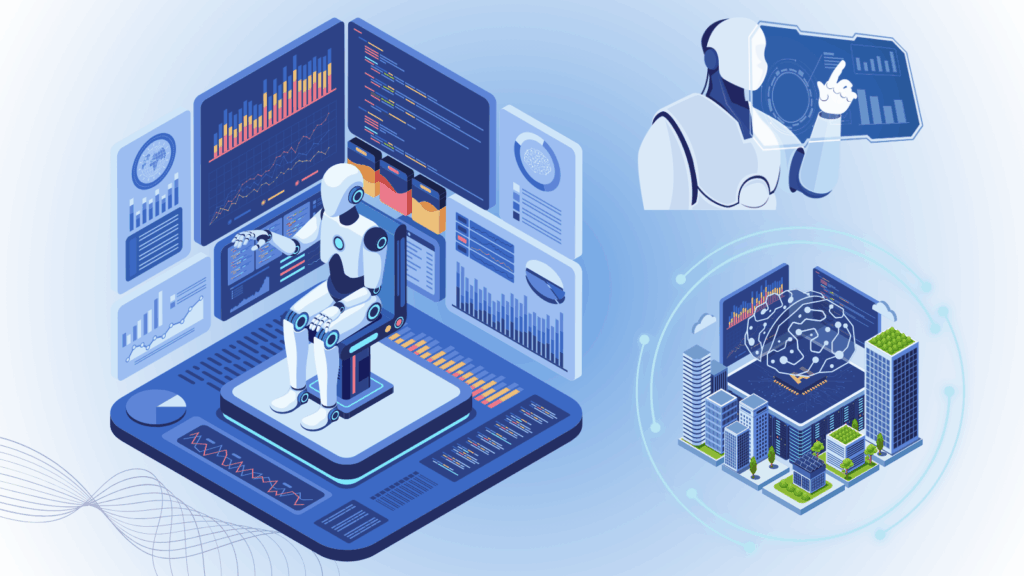
AI-Powered Automation of Problem Resolution:
AI not only identifies and suggests solutions but can also execute fixes autonomously.
- Automated Customer Support
- AI chatbots provide instant answers, resolving common issues without human intervention.
- Example: An AI chatbot handling 80% of customer inquiries, reducing wait times.
- Self-Healing Systems
- AI can detect and resolve IT issues before they disrupt operations.
- Example: AI automatically restarting a failing server, ensuring minimal downtime.
- Robotic Process Automation (RPA) for Task Execution
- AI-driven bots can perform repetitive tasks quickly and accurately.
- Example: AI bots updating customer data and sending automated responses to service requests.
The Future of AI in Problem-Solving:
AI is continuously evolving, and its role in business problem-solving will only expand.
- Hyper-Personalized Problem Resolution
- AI will provide tailored solutions based on customer preferences and history.
- Predictive Problem Prevention
- AI will prevent issues before they occur by detecting early warning signs.
- AI-Driven Collaboration for Complex Issues
- AI will assist human experts by providing insights, enhancing decision-making speed.
- Explainable AI (XAI) for Trust and Understanding
- AI will become more transparent, helping businesses understand how decisions are made.
- AI-Powered Employee Training
- AI-driven learning systems will enhance workforce problem-solving skills.
Conclusion:
AI is revolutionizing business problem-solving by speeding up diagnosis, improving solution generation, and automating execution. Companies that leverage AI gain a competitive edge through increased efficiency, reduced errors, and faster response times.
As AI technology advances, businesses that adopt these innovations will lead the way in the fast-paced digital world.