
The Leadership Decision That Makes (or Breaks) Enterprise Transformation
Enterprise transformations rarely fail because the strategy is wrong.
They fail because execution fragments—quietly, over quarters—across too many vendors, too many handoffs, and too many incentives pulling in different directions.
Whether you are a CEO scaling globally, a CFO protecting margin, a COO strengthening operational resilience, or a CIO modernizing core platforms, the same strategic question eventually surfaces:
Should we consolidate under a single strategic vendor, or distribute delivery across multiple specialized vendors?
This is not a procurement debate.
It is an enterprise operating model decision—one that directly impacts speed to value, cost discipline, risk exposure, and long-term scalability.
Many organizations adopt multi-vendor environments believing they reduce risk through diversification. Over time, they often discover the opposite: execution slows, accountability blurs, costs hide in coordination and integration effort, and complexity compounds.
At the same time, single-vendor models can unlock speed and clarity—but only when dependency risk and governance are intentionally engineered.
This blog explores the real trade-offs behind single vendor contract vs multiple vendors, why the stakes are higher globally today, and how leadership teams can design a model that delivers sustained, measurable outcomes.
THE STRATEGIC REALITY FACING GLOBAL LEADERS
Today’s leadership teams operate under four converging pressures:
- Margin pressure without the ability to compromise quality or compliance
- Scale demands across geographies, channels, and regulatory regimes
- Talent constraints, especially in digital, analytics, finance transformation, and operations
- Rising complexity driven by tool sprawl, process variants, and legacy operating models
In this environment, vendor strategy is no longer about sourcing efficiency.
It is about operating leverage.
If your enterprise is running multiple initiatives simultaneously—ERP modernization, shared services expansion, automation, cybersecurity, finance transformation, customer experience redesign—the real question is not who is cheapest, but:
Who owns the outcome when delivery depends on multiple vendors and internal teams?
That question defines success or failure.
WHY VENDOR FRAGMENTATION BECOMES A HIDDEN ENTERPRISE TAX
How vendor sprawl happens globally
Most organizations do not intentionally design fragmented vendor ecosystems. They evolve through:
- Functional sourcing decisions made in isolation
- Project-based procurement that becomes permanent
- Short-term firefighting to address capacity gaps
- M&A activity and regional autonomy
- The assumption that “more vendors = less risk”
The business impact leaders feel, but struggle to quantify
Financial impact
- Overlapping scopes and duplicated effort
- Change requests driven by unclear vendor boundaries
- Escalating integration and coordination costs
Operational impact
- Slower incident resolution across vendor boundaries
- Conflicting SLAs that optimize silos rather than outcomes
- Difficulty standardizing processes across regions
Productivity impact
- Senior leaders acting as vendor coordinators
- Teams spending time aligning instead of executing
- Knowledge fragmentation increasing continuity risk
Strategic impact
- Slower execution of enterprise priorities
- Inconsistent customer and employee experiences
- Reduced confidence in forecasts and decision-making
Left unchecked, these factors lead to transformation fatigue, governance overload, and growing technical and process debt—without proportional value creation.
WHY THIS DECISION IS MORE CRITICAL THAN EVER
What has fundamentally changed
Global enterprises now operate in an environment shaped by:
- Highly interdependent transformation across technology, process, data, and risk
- Board-level pressure for faster, measurable ROI
- Talent volatility and skills scarcity
- Heightened regulatory scrutiny across industries
- Increased expectations for operational resilience and cyber readiness
The largest risk surface is no longer technology—it is the interfaces between vendors.
Why traditional governance fails
Organizations often respond to complexity with more PMOs, more reporting, more meetings, and more detailed SLAs.
These mechanisms manage symptoms, not causes.
The root issue is misaligned accountability.
When no one owns the end-to-end outcome, optimization becomes local, decision velocity slows, and value erodes.

SINGLE VENDOR VS MULTIPLE VENDORS: THE REAL TRADE-
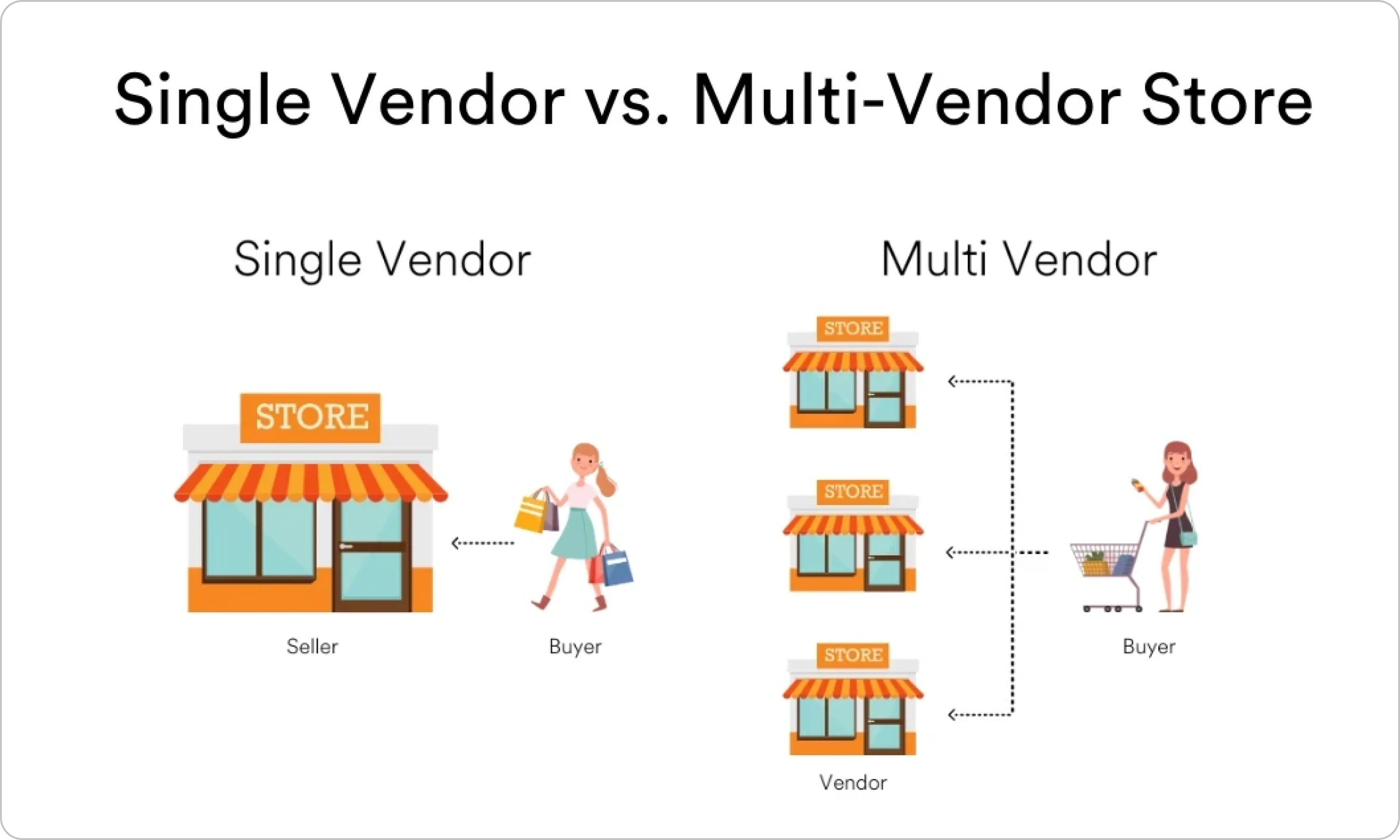
The choice between a single vendor model and a multi-vendor ecosystem is structural, not ideological.
It determines how accountability, decision-making, and execution actually work at scale.
1.Single vendor models typically offer:
- Clear end-to-end accountability across interconnected processes
- Faster decision-making and reduced execution friction
- Simpler governance with outcome-focused performance discussions
- Key requirement: deliberate design to manage concentration risk, maintain transparency, and preserve exit flexibility
2. Multi-vendor models are often chosen to:
- Reduce dependency risk
- Access specialized or best-of-breed capabilities
- Practical reality: higher operational complexity as accountability is distributed and coordination effort increases
In multi-vendor environments:
- Leadership teams frequently mediate cross-vendor issues
- Governance structures become heavier and slower
- Speed to value declines as execution depends on continuous alignment across providers
Cost visibility differs materially:
- Single vendor models generally provide clearer integration and delivery cost transparency
- Multi-vendor models can obscure true cost—competitive rates often hide coordination overhead, rework, and integration expense
Scalability is a major differentiator:
- Well-designed single vendor models can scale smoothly across regions and business units
- Multi-vendor models can scale only with strong orchestration capabilities
- Without orchestration, complexity increases faster than capacity
Bottom line:
- Both models can succeed—and both can fail
- Success is not determined by vendor count
- It depends on how accountability, incentives, governance, and risk mitigation are designed and enforced
USD-BASED GLOBAL BENCHMARKS AND ROI RANGES
To anchor this decision in financial reality, global enterprises increasingly rely on benchmark-driven analysis rather than anecdotal experience.
- Fragmented multi-vendor environments typically incur 8–15% of annual vendor spend in hidden coordination costs.
- Vendor consolidation or prime-vendor models commonly achieve 10–20% total run-cost reduction within 12–24 months.
- Highly fragmented ecosystems often underestimate true cost by $5M–$25M USD per year, depending on scale.
Speed and value realization
- Clear ownership models deliver 25–40% faster time-to-value.
- Stabilization timelines shrink from 18–24 months to 9–14 months.
- Delayed benefits often cost $1M–$3M USD per quarter in large programs.
Operational and compliance impact
- Incident resolution improves by 20–35%.
- Audit findings reduce by 20–40%.
- Enterprises protect $3M–$10M USD annually in avoided disruption and remediation.
Typical ROI
- Well-governed single or prime-vendor models: 1.5x–3.5x ROI over 24–36 months
- Unmanaged multi-vendor models: 10–25% benefit leakage
- Strongly orchestrated multi-vendor models: 1.3x–2.5x ROI

THE ARCOS FRAMEWORK FOR EXECUTIVE DECISION-MAKING
Accountability. Risk. Cost. Outcomes. Scalability.
Leadership teams that evaluate vendor strategy through these five lenses make faster, more defensible decisions—and avoid structural execution failure.
A PRACTICAL 90-DAY EXECUTION ROADMAP
Days 1–30: Diagnose
Days 31–60: Design
Days 61–90: Execute, pilot, and scale deliberately
This phased approach minimizes disruption while building measurable momentum.
EXECUTIVE TAKEAWAYS
- Vendor strategy is an operating model choice, not a sourcing exercise
- Coordination cost is the biggest hidden margin killer
- Accountability design determines speed, cost, and resilience
- ROI compounds where ownership is clear and incentives align
TURNING VENDOR STRATEGY INTO MEASURABLE OUTCOMES
If your organization is evaluating vendor consolidation, struggling with multi-vendor coordination, or seeing transformation benefits fall short of expectations, the issue is rarely intent or effort—it is execution design.
Now is the time to step back and assess:
- Where accountability is fragmented
- Where coordination costs are silently eroding ROI
- Where governance exists on paper but not in practice
Organizations that address these questions early avoid years of incremental complexity and unlock faster, more predictable value realization.
If you are reconsidering your vendor operating model—or want to pressure-test your current approach—start with an outcome-led assessment.
Clarity of ownership, not vendor count, is what ultimately determines success.
FINAL THOUGHT
The debate around single vendor contract vs multiple vendors continues because both approaches can work.
What separates success from failure is whether the model creates:
- Clear end-to-end accountability
- Outcome-aligned incentives
- Governance that enables decisions
- Scalable execution without complexity creep
When leadership attention shifts from strategy to coordination, the problem is rarely tools or talent.
It is the engine of execution and that engine begins with how work is owned, governed, and delivered.